
Katanga in 2026: What We've Built and Where We're Going
Katanga started as an answer to a simple observation: Zambian schools run on student records, and most of those records still live in books and spreadsheets that each hold one piece of the picture. Two years on, it is worth taking stock of what the platform actually does today — and where we are going next.
Where Katanga stands
The platform today is organized around one idea that has not changed: a single student record that follows the student through the school.
Around that record, the current feature set covers the core of school administration:
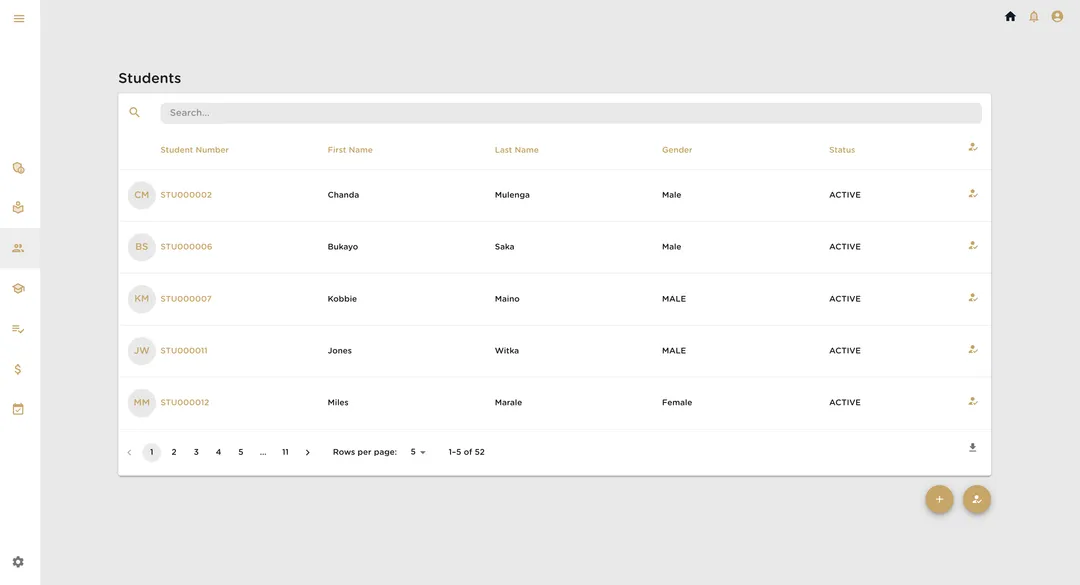
- Student records. Every student has a profile carrying personal details, contact and emergency contact information, and their full administrative history. Students can be updated and archived without losing that history.
- Enrollment. Students enroll into grades and classes per term and year, so the record accumulates a history rather than resetting annually.
- Attendance. Class attendance is marked by grade and class — present, absent, tardy, sick — and stored per student, viewable across terms and years.
- Assessments and grading. Subjects belong to enrollments, and scores are recorded against them — so results live on the student record instead of in separate mark books.
- Billing. Fee structures are defined per year or term, applied to enrolled students, and tracked through invoices, payments and statements. Schools can accept online payments through ZANACO.
- Staff and roles. Administrators manage the school; teachers get their own dashboard organized around their classes; students get login access on higher plans.
- Scale. Schools can run multiple campuses — up to five on the Emerald plan — and Katanga includes a website feature for the school’s public presence.
That list is deliberately unglamorous. It is the administrative core a school runs on every day, and getting it right matters more than adding edge features.
What we have learned
The clearest lesson from building this alongside Zambian schools is that adoption is gradual by necessity. A school does not stop using its registers on a Friday and start using software on a Monday. Schools that succeed with the platform tend to start with the record that hurts most — usually student lists or fees — and expand from there. That shaped how we priced the plans: Lite covers basic student records and staff at a size a small school can commit to, and each tier adds capability as the school grows into it.
The second lesson is about roles. The administrator, the class teacher and the bursar do different work and need different views of the same record. A single shared screen would have failed all three.
Where we are going
Our focus for the rest of 2026 is depth rather than breadth. A few directions we are actively working toward:
- Deeper reporting. Schools increasingly ask questions of their data — enrollment trends, attendance patterns, fee collection — and the answers should be easy to reach.
- A better guardian and family view. Parents are part of the school’s administrative life; how they see statements, results and communication is an area we are exploring carefully.
- More flexible onboarding. Bringing existing records into Katanga should keep getting easier — the transition problem never really goes away.
We will write about these as they ship. When we have committed to dates, we will say so; until then, we would rather build than promise.
What has not changed
The direction stays the same as the day we started: one reliable record per student, and a school’s administration built on top of it. Attendance, results, fees and enrollment are not separate products glued together — they are views of the same student. Every addition above, and everything planned, has to make that record more useful or it does not belong in the product.
A note of thanks
Katanga exists because schools — administrators, teachers, bursars, owners — told us what their administration actually looks like. Much of what is in the product today started as someone’s frustrated description of a spreadsheet. Keep telling us. It is how the roadmap gets written.
If you are new here: create an account, browse the features and pricing, or start with our earlier posts on what a school management system should do and choosing one in Zambia.