
What Should a School Management System Actually Do?
“School management system” is a broad label. It gets attached to everything from a simple class-list app to a full enterprise platform. If you are evaluating one — or building processes around one — it helps to have a clear picture of what it should actually do.
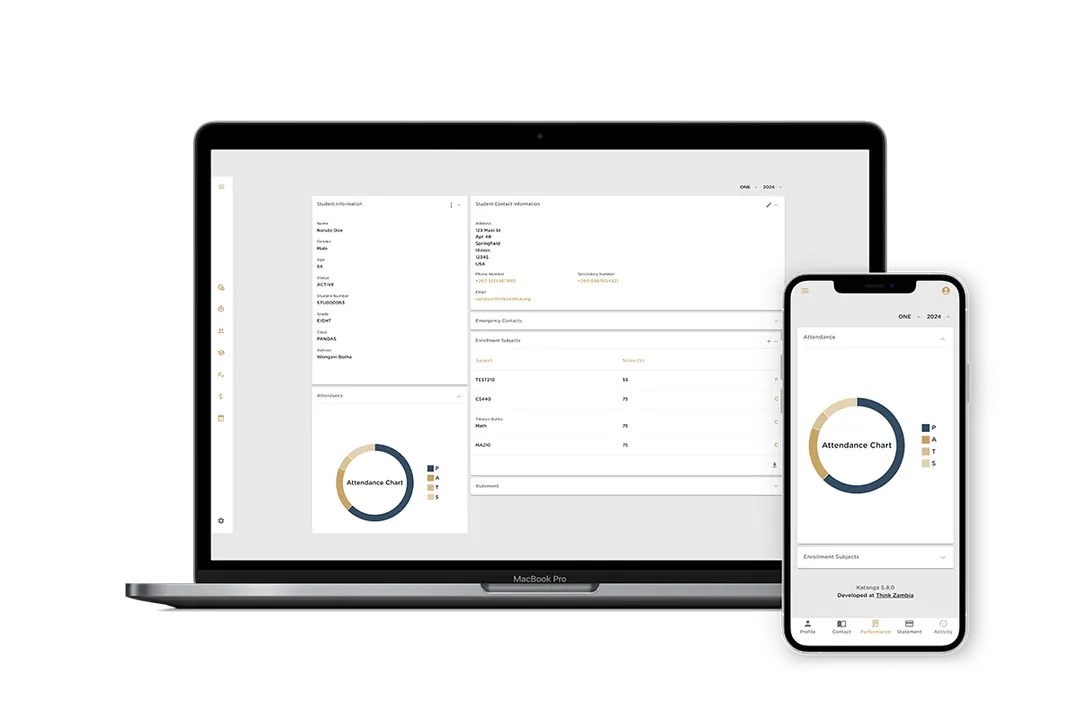
This is our working definition: a school management system keeps one reliable record for each student and builds the school’s administration on top of it. Everything else is a detail.
The foundation: a single student record
Everything a school does administratively is about a student — admitting them, enrolling them, marking their attendance, grading their work, billing their fees. When each of those activities keeps its own separate record, the school spends its time maintaining the seams between them.
A proper system holds one profile per student and attaches the rest to it:
- identity and contact details,
- applications and admissions,
- enrollment into classes, terms and years,
- attendance history,
- subjects and academic results,
- fees, invoices, payments and statements.
If a system cannot hold that core, the features around the edges will not save it.
The jobs it has to do
On top of the record, a school administration platform earns its keep on a short list of daily jobs:
Enrollment and progression. Students move through classes, terms and years. The system should let a school enroll a student into a new year without creating a new student — the record should carry the history forward.
Attendance. Class attendance, taken quickly, stored per student, viewable by grade, class and year. Useful attendance is a history, not a daily sheet.
Assessments and grading. Scores recorded against the subjects a student is actually enrolled in, so results live on the record instead of in separate mark books and spreadsheets.
Fee management. Fee structures defined once per year or term, charges applied to enrolled students, payments — including online payments — recorded against the account, and a statement that answers “what is owed” without a manual calculation.
Staff and roles. Administrators, teachers, bursars and students need different views of the same information. A system that shows everyone everything — or locks everyone out of what they need — creates problems instead of removing them.
A way in for the school. The best system is useless if the school cannot get its data into it. Import, gradual adoption, and room to grow from a small rollout matter more than an impressive feature list.
What it should not demand
A good system should not demand that a school change how it teaches. It should fit the school’s structure — grades, classes, terms, fee arrangements — rather than force the school to fit the software. It should not require every stakeholder to be technical. And it should not strand the school’s data: records entered over years belong to the school.
Signs a system is not ready
A few warnings worth listening for during evaluation:
- Every feature demo starts from a fresh student. If re-enrolling an existing student for a new year means creating a duplicate, the record model is wrong.
- Exports are the answer to everything. If the only way to see balances or attendance across the school is to export and spreadsheet it, the system is a filing cabinet, not a tool.
- Roles are an afterthought. A demo that only ever shows the administrator’s view usually means teachers and students were not designed for.
Where the details differ
After the core, systems diverge — parent and student portals, multi-campus support, public websites, reporting depth, integrations with local payment providers. These matter, but they are secondary. A school comparing platforms should score the core first and the extras second.
Katanga is built around exactly this definition: one student record, with enrollment, attendance, grading and billing organized on top of it, and different experiences for administrators, teachers and students. You can see the current feature set on our features page and the plans on pricing.
Whatever system a school chooses, the question worth asking of every feature is the same: does it make the student record more reliable, or just add another place to maintain?