
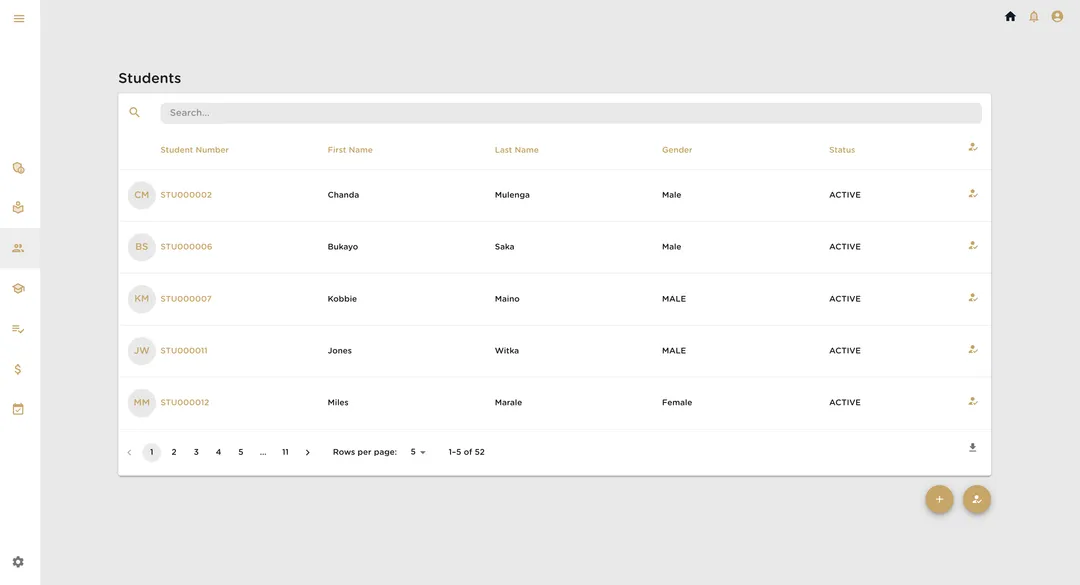
Why Schools Are Moving Beyond Spreadsheets for Student Records
Spreadsheets earned their place in school administration honestly. They are cheap, familiar and flexible. A bursar can open a sheet and record a payment in seconds. A deputy head can keep a passable list of enrolled students without any training at all.
So this is not an argument that spreadsheets are bad. It is an explanation of where they stop working well, and why many schools are gradually replacing them with structured student records.
Where spreadsheets work well
For a small school — say a community school with one administrator and a hundred students — a spreadsheet can carry most of the load. One file for fees, one for the class list, maybe one for exam marks. If only one or two people touch the files, they stay reasonably accurate.
Spreadsheets also excel at ad-hoc analysis. When you need a quick calculation or a one-off report, nothing is faster.
Where they start to strain
The problems begin when the same student exists in many spreadsheets at once.
Duplicated entry. A new pupil is added to the admissions sheet, then again to the class list, then again to the fees sheet, then again to the register the class teacher keeps. Each copy is a chance to misspell a name, transpose a date of birth, or record the wrong guardian’s phone number.
Versions that disagree. Which file has the correct balance for Term 2 — the one on the bursar’s laptop, the one emailed to the head teacher last month, or the printout in the office drawer? Spreadsheets have no concept of a single source of truth. Whoever saved last wins.
No history you can rely on. When a student moves from Grade 5 to Grade 6, the typical spreadsheet approach is to add them to a new sheet and forget the old one. Three years later, reconstructing that student’s journey through the school means digging through archived files — if they still exist.
Weak access control. A spreadsheet is either shared or it is not. There is no easy way to let a class teacher see attendance for their class but not the bursar’s fee records, or to know who changed a figure last Tuesday.
Reports that take effort. Asking “how many Grade 9 students owe fees this term” means cross-referencing at least two sheets by hand. The question is simple. Answering it is not.
What structured student records change
A school records management system approaches the problem differently. Instead of many lists about the same student, there is one student record, and the school’s activities attach to it.
Attendance is not a separate register — it is a history on the student’s profile. Billing is not a separate fees sheet — it is a statement on the student’s account. Enrollment is not a new row in a new file — it is a new entry on a record that already exists.
That shift has two practical consequences:
- Information is entered once. A name spelled correctly on admission stays correct on the class list, the register, the report and the invoice.
- Information is shared, not copied. The administrator, the teacher and the bursar look at the same record, each through the view relevant to their role.
The honest trade-offs
Moving beyond spreadsheets is not free. Structured systems require data entry discipline — if enrollment is not kept up to date, attendance and billing inherit the error. They require a computer and connectivity at the point of use. And there is a learning curve for staff who have run a school on paper and Excel for years.
For most schools the honest answer is gradual: keep using spreadsheets where they are strong — quick analysis, one-off calculations — while moving the records that must be shared and trusted into a system built for that purpose.
Making the transition
The smoothest transitions we see start with the school’s most painful record — usually student lists or fee tracking — and expand from there rather than migrating everything at once. Katanga’s pricing plans are structured around exactly this kind of staged adoption, from a basic student list upwards.
Spreadsheets got schools this far, and they are not going away. But the moment two people need the same number at the same time, a shared record beats a shared file.